

LA HUERTA ES VIDA
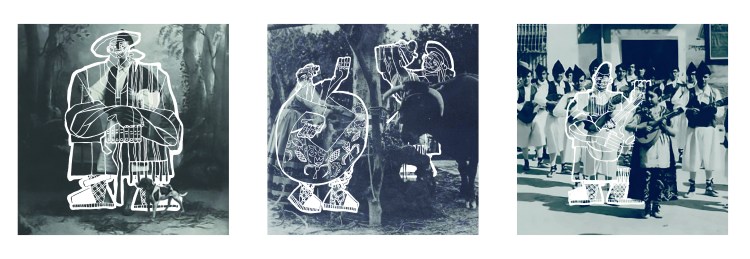
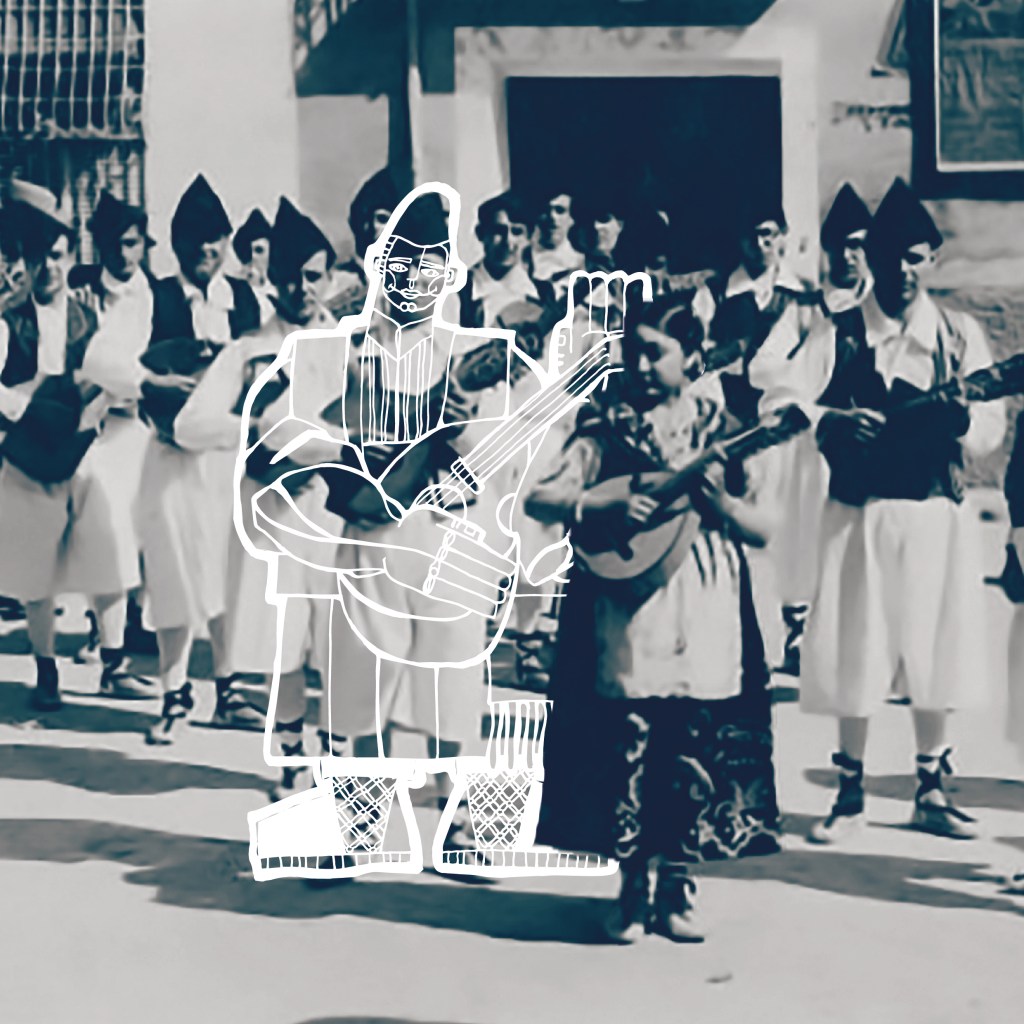
In these images, we can see scenes that were part of the daily life of the «huertanas» and «huertanos» (people from the countryside) of the Region of Murcia in the past. Some of the most prominent activities were: tending to the fields, harvesting crops, primarily lemons, fetching water from the well, embroidering, dancing «jotas» (the traditional dance of Murcia and other regions of Spain), singing, or playing the Bandurria (a traditional string instrument).
In these collages, the protagonists are dressed in traditional «Huertana» attire. The men wear «Zaragüelles» (wide trousers mainly in white), a vest whose colors match the «Fajin» (a cloth serving as a belt), a shirt, patterned stockings, and espadrilles.
The women wear the «Refajo» (the skirt embroidered by themselves, their mothers, or their grandmothers), these skirts were always decorated with embroideries referring to the nature that is part of the orchard. They wore an apron (also embroidered with flowers) and over their shoulders, they wore the «mantón de Manila» (shawl ornamented with flowers), and finally, they adorned their hair with flowers and wore patterned stockings and espadrilles.
These images are a tribute to my cultural heritage and to the beauty of the Murcia orchard.
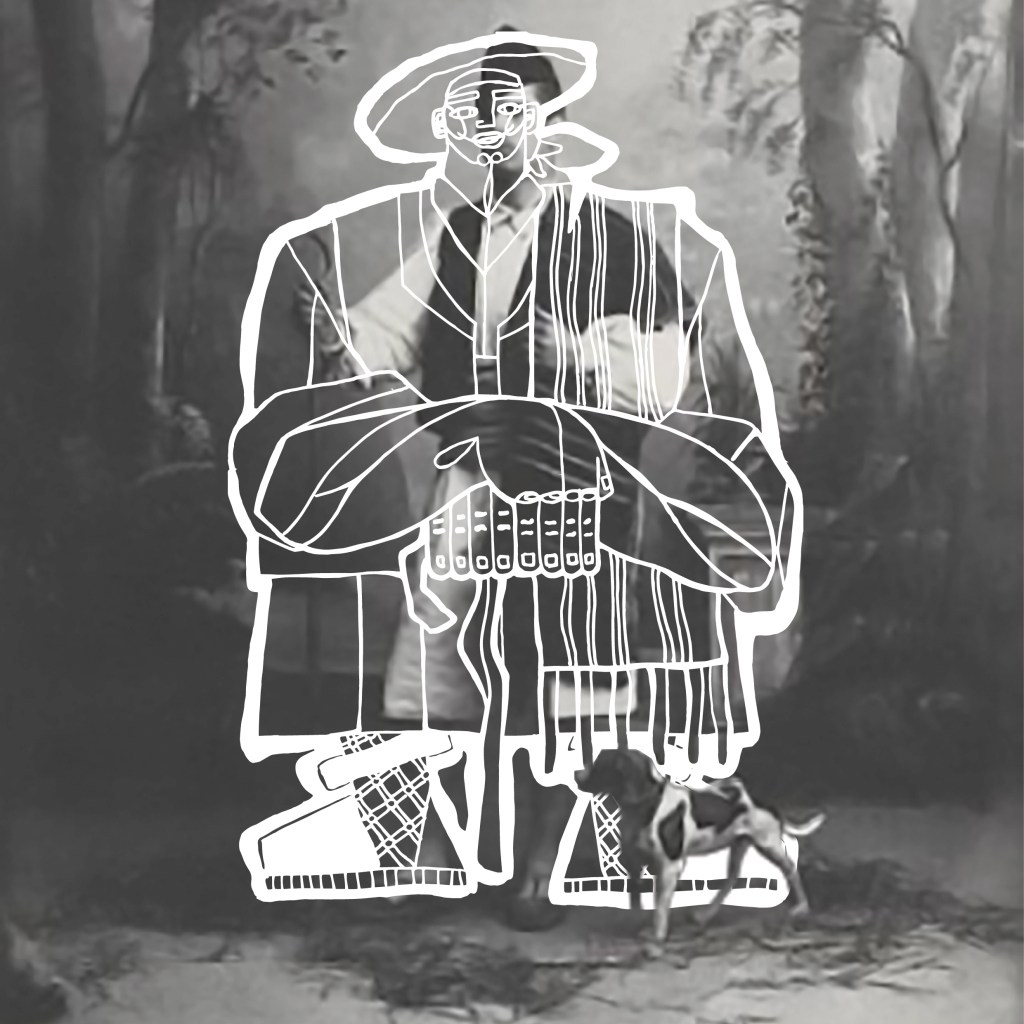

En estas imágenes podemos ver escenas que formaban parte de la vida cotidiana de las huertanas y los huertanos de la Región de Murcia en el pasado. Algunas de las actividades más destacadas eran: Cuidar del campo, recolectar la cosecha, principalmente la del limón, ir al pozo a por agua, bordar, bailar jotas (el baile tradicional de Murcia y de otras regiones de España) cantar o tocar la bandurria.
En estos collages los protagonistas aparecen vistiendo la ropa tradicional Huertana, los hombres visten los Zaragüelles ( un pantalón ancho principalmente de color blanco), el chaleco cuyops colores combinan co el Fajin (un tejido que ejerce la función de cinturón), la camisa, las medias caladas y las esparteñas.
Las mujeres visten el Refajo(la falda que ha sido bordada por ellas mismas, por sus madres o abuelas) estas faldas siempre estaban decoradas con bordados que hacen referencia a la naturaleza que forma parte de la huerta; vestían el delantal (También bordado con flores); sobre los hombros llevaban el mantón de Manila (Ornamentado con flores) y para terminar decoraban su pelo con flores, y se calzaban con medias caladas y esparteñas.
Estas imágenes son un homenaje a mi herencia cultural y a la belleza de la huerta de Murcia.
 elpelinchin.com